

No-Till Pasture Drills: The Revolutionary Farming Tool
When it comes to efficient and sustainable farming practices, using a pasture drill is a game-changer for many agricultural operations. No-till pasture drills are specialised equipment designed to plant seeds directly into pasture or grassland without disturbing the existing soil structure. But what exactly is a pasture drill and why should farmers consider investing in one?
What is a No-Till Seed Drill?
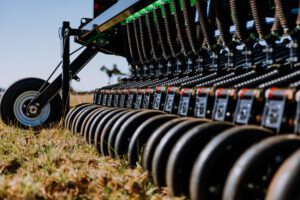
A pasture drill, also known as a seed drill, is a piece of equipment used to sow seeds into the ground at a consistent depth and spacing. This tool is specifically designed for planting grasses, legumes, and other forage crops in pastures and grasslands. Pasture drills come in various sizes and configurations, mostly for tractor-mounted units. Seed drills may be fitted with different openers such as coulters, discs or tynes. A no-till drill is used to sow seeding directing into the soil with minimal disturbance to soil structure.
Why use a Seed Drill?
Pasture drills are primarily used for establishing new pastures, renovating existing pastures, and overseeding to increase forage productivity. By planting seeds directly into the soil without tilling, pasture drills help improve soil health, reduce erosion, conserve moisture, and enhance forage quality. In addition, using a pasture drill can save time, labor, and fuel compared to traditional planting methods.
How Do Seed Drills Work?
Pasture drills work by drawing seeds from a seed box and placing them in the ground at a precise depth and precise spacing. Some pasture drills have split or multiple seed boxes to allow for planting different types of seeds simultaneously (e.g large and small seed). The depth and spacing of the seeds can be adjusted to meet specific planting requirements, ensuring optimal seed-to-soil contact for germination.
How Do You Operate a Pasture Seed Drill?
Operating a pasture seed drill is relatively straightforward, but proper setup, calibration and maintenance are crucial for achieving successful results. Before using a pasture drill, it is essential to calibrate the equipment to ensure accurate seed placement and avoid over or under-seeding. Seed drills may offer digital or manual calibration. Additionally, regular maintenance, such as cleaning and greasing, will prolong the lifespan of the pasture drill and ensure consistent performance.
Benefits of Using a Pasture Seed Drill
There are numerous benefits to using a pasture seed drill;
1. Improved Soil Health: No-till planting with a pasture drill helps preserve soil structure and reduce soil erosion, leading to healthier and more productive pastures.
2. Increased Forage Quality: By planting seeds at precise depths and spacing, pasture drills promote uniform growth and better forage quality for livestock grazing.
3. Time and Labor Savings: Using a pasture drill can significantly reduce the time and labor required for planting, allowing farmers to cover more land efficiently.
4. Environmental Benefits: No-till planting with a pasture drill helps reduce carbon emissions, conserve water, and protect biodiversity in grasslands.
No-till pasture drills, like the Darryl Drill, are a valuable tool for modern farming operations looking to improve productivity, sustainability, and profitability. By investing in a pasture seed drill and adopting no-till planting practices, farmers can reap the benefits of healthier soils, higher forage yields, and a more sustainable farming future.
References:
1. Tillage and Seeding Equipment, Montana State University Extension, https://store.msuextension.org/products/tillage-and-seeding-equipment__mt200310ag-10.aspx
2. No-till Seeding Systems for Forage Crops, University of Kentucky Cooperative Extension Service, https://uknowledge.uky.edu/cgi/viewcontent.cgi?article=1003&context=aen_facpub